
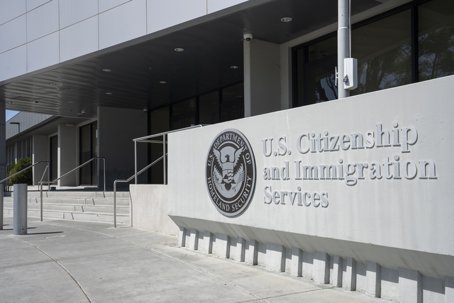
A new USCIS policy memo issued on May 21, 2026, may significantly reshape how green card applications filed inside the United States are reviewed and approved. For immigrants applying through family sponsorship, employment-based petitions, marriage to a U.S. citizen, or work visas such as H-1B and L-1, this update could have major consequences.
The memo signals a major shift in how USCIS views Adjustment of Status (AOS). Historically, many eligible applicants could apply for permanent residence from inside the United States without having to leave the country for consular processing abroad. Under the new guidance, USCIS is emphasizing that Adjustment of Status should no longer be treated as the “default” path to obtaining a green card.
Instead, officers are being instructed to view Adjustment of Status as an “extraordinary discretionary relief” and to consider whether applicants should pursue immigrant visa processing through a U.S. consulate abroad instead.
What Is USCIS Changing?
The policy memo, issued by USCIS Director Joseph Edlow, reinterprets Section 245 of the Immigration and Nationality Act (INA). USCIS now states that Adjustment of Status was never intended to replace the traditional immigrant visa process through U.S. consulates overseas.
The memo relies heavily on prior court decisions, including the Supreme Court’s 2022 decision in Patel v. Garland, which confirmed that Adjustment of Status is discretionary and not a guaranteed right, even if an applicant otherwise qualifies under the law.
According to the memo, USCIS officers should consider the availability of consular processing as a factor when deciding whether an applicant deserves favorable discretion for Adjustment of Status.
In practical terms, this means that simply choosing to file for Adjustment of Status inside the United States instead of completing immigrant visa processing abroad may now be viewed negatively in some cases.
Why This Matters for Green Card Applicants
For decades, Adjustment of Status has been one of the most common and convenient pathways to permanent residence for individuals already living in the United States.
Applicants often preferred Adjustment of Status because it allowed them to:
Remain in the United States during processing
Apply for work authorization
Avoid long periods of family separation abroad
Continue working and maintaining stability while waiting for a decision
The new USCIS guidance could make these cases substantially more difficult, especially for applicants who are not clearly protected by dual-intent visa categories or other statutory exceptions.
Who May Be Less Affected by the Memo?
The memo appears to acknowledge certain categories that may still have stronger arguments for Adjustment of Status approval.
Dual Intent Visa Holders
Some nonimmigrant visa categories were specifically designed to allow foreign nationals to pursue permanent residence while maintaining temporary status in the United States.
These commonly include:
H-1B workers
H-4 dependents
L-1 intracompany transferees
L-2 dependents
K-1 fiancé visa holders
K-2 and K-3 dependents
Certain O-1 visa holders
Religious workers in some situations
Although these applicants may still qualify for Adjustment of Status, USCIS has made clear that simply holding a dual-intent visa does not automatically guarantee approval. Officers may still evaluate whether the applicant deserves favorable discretion based on the “totality of the circumstances.”
Categories That Could Face Higher Scrutiny
The memo may create substantial challenges for many other applicants, including:
F-1 students
OPT and STEM OPT participants
E-2 investors
TN visa holders
B-1/B-2 visitors
Family-based applicants who overstayed status
Employment-based Adjustment of Status applicants
Marriage-based green card applicants
Certain asylum-based Adjustment cases
Historically, marriage-based green card cases for spouses of U.S. citizens were often considered relatively straightforward if eligibility requirements were met. Under the new policy framework, USCIS officers may now treat the decision to pursue Adjustment of Status instead of consular processing as a negative discretionary factor.
This could increase the risk of denials and, in some cases, place applicants into removal proceedings after a denied application.
Employment-Based Green Card Applicants Should Be Prepared
Employment-based immigrants pursuing PERM labor certifications, National Interest Waivers (NIW), EB-1 petitions, or other employment-based categories should carefully evaluate their immigration strategy moving forward.
Even applicants in H-1B or L-1 status may now need to demonstrate stronger favorable discretionary factors to secure Adjustment of Status approval.
This may include evidence such as:
Long-term lawful status compliance
Strong employment history
Tax compliance
Community involvement
Family ties in the United States
Good moral character
Absence of criminal history
Why Maintaining Status Is More Important Than Ever
One of the most important takeaways from this policy shift is the need to maintain valid nonimmigrant status whenever possible.
Applicants relying solely on pending Adjustment of Status applications and related work permits could face significant uncertainty if denial rates increase.
Maintaining underlying visa status may help preserve options for:
Consular processing
Continued employment authorization
Travel flexibility
Avoiding unlawful presence issues
For many individuals, strategic immigration planning will now be more important than ever before.
Could More Cases Move to Immigration Court?
Some immigration attorneys believe this memo may unintentionally push more applicants into removal proceedings, where they could renew Adjustment of Status requests before an immigration judge rather than USCIS.
This may especially affect immediate relative cases involving spouses, parents, and children of U.S. citizens who are attempting to avoid lengthy family separation through consular processing abroad.
Whether this becomes a widespread strategy remains to be seen, but many practitioners are closely monitoring how USCIS implements the new guidance in practice.
What Should Immigrants Do Now?
If you are planning to apply for a green card through Adjustment of Status, proactive preparation is critical.
Applicants should consider:
Maintaining lawful immigration status whenever possible
Avoiding visa violations or unauthorized employment
Gathering evidence of positive equities and good moral character
Consulting with an experienced immigration attorney early
Preparing for the possibility of consular processing if necessary
Because this policy may dramatically affect case strategy, individualized legal guidance is extremely important.
Speak With an Immigration Attorney About Your Green Card Options
The immigration process is changing rapidly, and this new USCIS memo may have far-reaching consequences for family-based and employment-based immigrants alike.
At US Immigration Law Counsel, we help individuals and families evaluate their immigration options, develop strategic case plans, and navigate complex Adjustment of Status and consular processing matters.
If you have questions about how this new USCIS policy could impact your case, contact our office today to schedule a consultation.